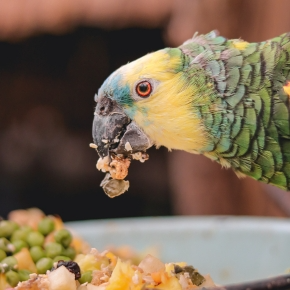
Our Vets in East Molesey share the Best Diet for Pet Birds
October 22, 2025


The old advice of “just give them seeds” has done more harm to pet birds than perhaps any other well-meaning but outdated recommendation. At Molesey Vets, our vets have witnessed first-hand how poor nutrition affects everything from feather quality to lifespan, and the transformation that occurs when birds receive proper diets is remarkable.
Below, you’ll find advice from our vets in East Molesey, on how to offer a more diverse diet to your pet bird. If you’d like to improve your pet’s nutrition or are concerned about their health, book a check-up and we’ll offer more tailored advice.
How diet can shape a bird’s wellbeing
Are seeds ‘bad’ for birds?
Seeds aren’t inherently bad – they’re actually an important part of many birds’ natural diets. The problem lies in variety, or rather, the lack thereof. A diet consisting solely of seeds is rather like living entirely on chips – both have micronutrient deficiencies, so although you might survive on the calories, you certainly won’t thrive.
What does a diverse diet look like?
Wild birds around Surrey consume an incredibly diverse diet: fruits, vegetables, insects, tree bark, flowers, and yes, seeds. This variety provides the complex range of vitamins, minerals, and nutrients their bodies require. Our pet birds need similar diversity to maintain optimal health.
Our vets have seen birds with chronic infections clear up simply through improved nutrition. Feathers become brighter and stronger, energy levels increase, and behavioural problems often improve when birds receive proper nourishment. Our team at Molesey Vets have also treated pet birds with fatty liver disease, vitamin deficiencies, and compromised immune systems – all linked to poor diets.
What to feed your bird at home
Our highly experienced vet and bird enthusiast Darren Partridge, based at our vet practice in East Molesey, advises that high-quality pellets form an excellent foundation for good bird nutrition, providing balanced nutrition in every bite. Unlike selective eating with mixed seeds, birds can’t pick out only their favourite bits and ignore the healthy components.
However, pellets alone aren’t the complete answer either. Darren recommends that fresh foods should comprise about 20-30% of your bird’s diet. Dark leafy greens, orange vegetables like carrots and sweet potato and bird-safe fruits provide essential vitamins and mental stimulation. Watching a cockatiel methodically destroy a piece of broccoli isn’t just entertaining – it’s natural foraging behaviour that benefits both mind and body.
If you’d like to speak with our vet and bird enthusiast Darren, just call us on 0208 979 1384 to book an appointment – exotic pet care is one of our services.
Foods to avoid for pet birds
Some foods are toxic to birds:
- Avocado – toxic to the heart and lungs
- Onions and garlic – can cause digestive issues and anaemia
- Fruit pits and seeds – apple, cherry and peach pits contain cyanogenic glycosides that release cyanide when digested
- Salty foods – risk of dehydration and kidney failure
- Raw mushrooms – may cause digestive and liver problems
- Tomato and potato leaves/stems – contain toxic solanine
- Dairy products – birds cannot digest lactose
- Uncooked beans – many varieties are poisonous
But the list of safe, nutritious options is extensive and exciting. The effort invested in proper nutrition pays dividends in longer, healthier, more vibrant lives for our feathered companions. Your bird’s diet truly shapes their wellbeing and happiness.
Need specific advice on health or nutrition for you feathered companion? Book a check-up and Darren or another of our friendly vets at Molesey Vets will be happy to help.