Providing care for your dog
Dogs are considered a human’s best friend, and at Claygate Vets, they’re certainly ours, too. We have everything you need from a dog vet in Claygate – we’re friendly, compassionate, and most of all, we’re just as loyal to our faithful canines as they are to us.
We make sure your precious pup receives top-quality care, with an experienced team of vets and nurses, extensive services, and state-of-the-art facilities to help keep them happy and healthy – meaning even more of the walks they love so much!
We also have a special Healthy Pet Club, promising the best preventative healthcare at an affordable price. Membership benefits include saving on annual vaccinations, life-saving treatments, and general check-ups – everything your dog needs.
Our dog-loving team have gathered important information regarding canine healthcare for all dog lovers and owners below. If you have any questions, please don’t hesitate to contact us today at Claygate Vets – we always love hearing from you.
Part of being a responsible pet owner is making sure your canine companion is up-to-date with their vaccinations to help protect against life-threatening diseases affecting the UK’s dog population. We recommend an initial vaccination course be administered to your puppy at eight weeks old, and two more at ten and 12 weeks. Beyond this, to help keep their immunity high, they’ll need annual boosters.
If you have an older dog and are concerned about starting vaccines or their immunity status, have a chat with our team, who will be happy to offer guidance and advice.
The vaccines that we use at Claygate Vets protect against the following diseases:
Distemper: A viral disease that is highly contagious – and preventable, through vaccination. Symptoms include a fever, lethargy, vomiting, coughing, and diarrhoea. In severe cases, it can result in seizures and death.
Parvovirus: Incredibly resilient – surviving in the environment for months to years – this highly infectious and often-fatal virus doesn’t require your dog to come into contact with another infected animal to transmit the disease. Parvovirus can result in a high fever, weakness, vomiting, and blood in the faeces.
Infectious Hepatitis: This can cause severe damage to the infected dog’s liver, causing abdominal pain, jaundice, and fever.
Leptospirosis: Most commonly transmitted through water contaminated by the urine of infected rodents or small mammals – such as rats or mice – this bacterial disease can also affect humans. It may result in organ failure, due to catastrophic damage to the liver and kidneys.
Parainfluenza:A viral respiratory infection that can lead to signs of infectious tracheobronchitis (kennel cough), often alongside other bacteria or viruses.
We are also able to administer separate vaccines that help protect your faithful pooch against:
Kennel cough: Kennel cough is often transmitted in areas with a dense population of canines, such as kennels – granting it the name – daycare facilities, and dog parks. The vaccine will offer protection against the highly contagious virus strain that causes this.
Rabies vaccine for pet travel: Even though dogs across the UK are not required to routinely have a rabies vaccine, if you are travelling abroad, your dog will need to be vaccinated – letting them enjoy their holiday, one tail wag at a time. Read more about pet travel before you pack both your suitcases.
They’re the most important part of your life (and they know it), so your four-legged friend deserves healthcare that is just as important – and you’ll find that when you enrol in our Healthy Pet Club!
We designed it to be just as special as your pup, with top-quality preventative care, cost-effective treatments, and discounts whenever you bring your dog to Claygate Vets.
Discover what’s on offer and join the club along with your very own VIP (Very Important Pet).
Regular health checks aren’t just an excuse to dote upon your loyal canine at Claygate Vets – they’re integral to making sure they remain in optimal health and maintain their quality of life, keeping them as happy and healthy as possible.
Puppies
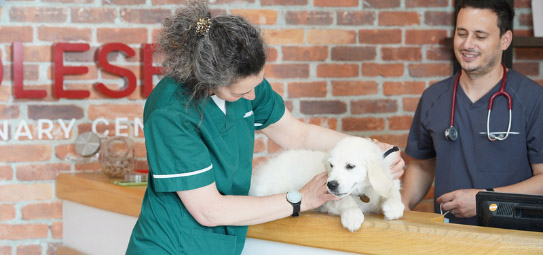
As your newest family member, they deserve the best start in life, and we’ll be your partners in pet care from their very first visit with us. Our highly qualified vets will perform a full-body examination, checking their skin, teeth, ears, mouth, nose and eyes, as well as testing for abnormalities by listening to their heart and lungs, and feeling their abdomen. You’ll also receive first-class advice about being the best possible pet parent, including preventative care moving forward, puppy socialisation, weight monitoring, neutering, and so much more.
It’s strongly suggested that to desensitise your puppy, you bring them to Claygate Vets from an early age. Introducing them to a veterinary environment while young will ease them gradually into their appointments as time goes on and lower their stress levels if they need emergency vet care. Just bring them into us for a casual weight check after their vaccinations and say hello – it may not be as exciting as walkies, but they’ll feel just as loved.
Adult dogs
To help make sure your dog is a picture of good health, staying on top of regular health checks is important— by doing a comprehensive examination, we can spot any issues early. After this, we can treat them or tailor a health management plan based on their individual needs, giving them a new leash on life!
As a practice, Claygate Vets recommends booking a health check every six months unless your dog suffers from a chronic condition, as they may need additional appointments for medication checks.
Senior dogs
At seven to eight years old, your dog is considered a senior – though this is dependent on their breed – and as with humans, may face a range of health conditions as they age.
Though they may be content to snooze by your side, our team at Claygate Vets recommend booking a consultation for routine blood and urine tests every six months, as this will help us fine-tune their daily routine and treatment the older (and wiser) they get.
A diet of love and cuddles isn’t the only thing that keeps your pooch bright-eyed – they have nutritional needs that need to be met, too! As they age, these will naturally change, so we recommend popping in for a consultation, where we’ll advise you on the best food for your pup based on their health status and activity levels.
Puppies
Smaller breeds have different nutritional needs to larger breeds, though we love them just the same. This means it’s important to continue feeding them the same diet their breeder did early on and pop in to your vet to discuss changing their food to prevent digestive issues. This should be nutritionally complete, containing all the vitamins and minerals your new friend needs. Claygate Vets recommend feeding them several small meals throughout the day to avoid overloading smaller tummies.
Adult dogs
Your dog’s weight and activity levels need to be taken into consideration when you’re making the transition from puppy to adult food, and our team of friendly vets are more than happy to help. We’ll direct you towards the food that will benefit them the most, weigh them at their routine health check to ensure you’re feeding them the right amount, and dote on them, as they deserve.
Senior dogs
They may be getting a bit grey around the edges, but a dog’s love is timeless – and staying on-track with their nutritional requirements means that bond lasts even longer. Over time, these will change, and you may notice several differences to your dog’s habits, such as gaining weight but eating less, or eating the same amount but losing weight and muscle. It’s best for your vet to investigate, as these could be signs of an underlying health condition like arthritis or diabetes that requires treatment. After their senior health check, our vets recommend swapping to a specially formulated senior diet that provides all the vitamins, minerals, proteins and calories to keep them glowing through their golden years.
To keep your entire family – including the four-legged kind – free from parasites and transmissible diseases, stay up-to-date with parasitic prevention products. Our experienced vets can help with creating a personalised plan for your dog by treating them regularly against fleas, ticks, lungworm, and intestinal worms.
Learn more about each of these parasites and the importance of protection, so cuddle time with your precious pup is uninterrupted!
Fleas
Despite their size, fleas are a big problem for both your dog and home due to their survivability on and off the host pet. An infestation will show in signs like itchiness, skin irritation, and in some cases, an allergic reaction, so you will want to avoid this as much as possible.
Chat with our team about recommended products and methods to keep them away.
Ticks
You may have heard of Lyme Disease, a tick-borne infection – this is just one of the complications caused by ticks, which are sadly prevalent in our area. Commonly found in grassy areas, they feed by attaching to your dog’s skin and feeding on their blood, causing irritation, infection and discomfort to your pet, and transmitting parasites that live in their blood. We advise checking your dog – and you – for any sign of ticks after adventures in the great outdoors, such as a bump on the skin.
Preventative treatments can vary, so please discuss your options with one of our vets to ensure the correct one is chosen.
Lungworm
Dogs have a fine-tuned sense of smell, sight and hearing – but this curiosity can often put them in great danger. Keep a close eye on your dog when they’re eating grass, playing with toys in the garden, or lapping up water from natural sources, as they may accidentally or deliberately ingest slugs or snails. If these creatures are infected, this can cause sudden, continuous bleeding and seizures, often resulting in death, so a preventative product is vital to protecting your pet. Sadly, this parasite is commonly found in Claygate and our surrounding areas, so the best approach to take is treatment, rather than prevention.
Intestinal worms
Your dogs aren’t the only ones at risk of a number of different intestinal worms – they can also transmit them to their favourite human, especially those with a weakened immune system.
A worm infestation can present as diarrhoea, weight loss and general malaise, so if your dog is showing any of these symptoms, this might be the reason. If that’s the case, contact our friendly team and arrange a consultation, where we can discuss the most appropriate course of treatments.
Neutering your dog has many benefits, such as reducing the risk of health conditions such as pyometra or mammary/testicular cancer, unwanted behaviours – like urine marking – and unplanned pregnancies, which can contribute to unwanted litters of puppies and overcrowding in animal shelters. This is strongly recommended by Claygate Vets and part of being a responsible pet owner, so to find out more, please visit our dedicated page on neutering and contact our dedicated team if you would like to make an appointment. We’ll do everything we can to help keep your dog safe and comfortable.
As a dog owner, how you care for them is a massive contributing factor to their behaviour, but that’s not the only thing. Just like us, their age, personality, health and past experiences can shape how they behave, and they may also suffer from anxiety or overstimulation due to sudden sounds, such as knocking on the door.
Proper training and exposure to situations from a young age will help keep your dog confident, along with booking a consultation so we can check for any underlying health conditions and discuss any concerns. They can’t tell us directly when something’s wrong, so it’s best to learn how to read their body language. They’ll thank you for it in the way they know best – with big, sloppy kisses.
Sadly, many of the pets that we see at Claygate Vets are affected by dental disease, so if your dog is struggling with bad breath or eating their food, the accumulation of plaque and tartar might be the reason.
Incorporate brushing their teeth into your dog’s routine to help reduce the risk and pop in for a visit so the vet can examine their teeth and advise on if any dental work is needed to keep your best friend smiling.
Visit our dental care page for more information.
Despite the puppy dog eyes staring at your exciting treats, you’re not supposed to share, as many of these are toxic to dogs, such as chocolate, raisins, grapes, onions, garlic, alcohol, avocado, nuts, and caffeine. These are the most common poisoning cases we’ve seen at Claygate Vets, while medications and the majority of household cleaners – which contain many harmful chemicals – are equally as dangerous, so keep them away from prying paws!
If you believe your dog has ingested a poisonous substance, contact us immediately as all cases of poisoning are treated as an emergency.
If your dog is overweight, don’t take it lightly – obesity increases the risk of a range of health issues like arthritis and diabetes, while also impairing their activity levels, lifespan, and quality of life.
If your dog has already been examined for underlying health conditions that directly contribute to weight gain, we offer free weight clinics, run by an experienced team of nurses. They will offer diet, exercise, and weight management tips to help keep your dog at a healthy weight, ensuring you and your pup stay inseparable for longer.
Have a chat with us about weight monitoring.
If you are a dog owner in Claygate and would like to register your pet with our compassionate team of dog vets, please don’t hesitate to contact us or register online. We look forward to meeting the two of you!